



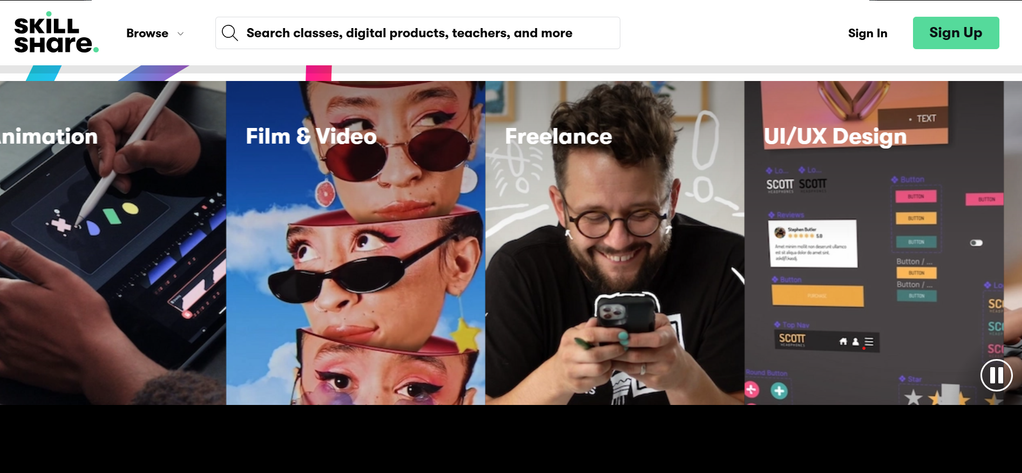
Skillshare is an online learning platform designed for people who want to develop practical skills through flexible digital classes. Its course library covers creative, professional, and personal-interest subjects, making it suitable for learners with different goals and experience levels. Instead of following a traditional classroom schedule, users can explore lessons at their own pace and return to topics whenever needed. The platform particularly appeals to people interested in areas such as design, photography, illustration, writing, marketing, freelancing, and productivity. With video-based lessons and project-oriented learning, it offers a convenient way to discover new subjects without committing to a conventional educational environment.
Course Variety Supports Different Learning Goals
One of the strongest aspects of the platform is its broad selection of classes. Learners can explore creative disciplines such as graphic design, drawing, photography, illustration, animation, and creative writing, while also finding courses related to business, marketing, productivity, and entrepreneurship. This variety makes the platform useful for both beginners and people looking to strengthen existing abilities. Users can choose introductory lessons when they are completely new to a subject or explore more focused topics as their knowledge develops. Having multiple categories available in one place also makes it easier to experiment with unfamiliar skills. This can encourage continuous learning without requiring learners to search across several separate educational platforms.
Flexible Lessons Fit Busy Personal Schedules
Online learning becomes more useful when it can adapt to everyday responsibilities, and the platform offers that flexibility. Learners can generally access classes according to their own schedules instead of attending lessons at fixed times. This arrangement can benefit students, working professionals, freelancers, and anyone balancing learning with other commitments. A person might complete a lesson during a lunch break, spend an evening working on a project, or return to a course over the weekend. The ability to learn gradually can also reduce pressure compared with rigid study schedules. However, this flexibility requires personal discipline because learners need to create their own routine and remain motivated enough to continue progressing.
Project Based Learning Encourages Practical Experience
Another appealing feature is the emphasis on learning through projects and practical activities. Rather than simply watching instructional videos, learners may have opportunities to apply concepts while developing something of their own. This approach can make lessons more engaging and help reinforce information through practice. For creative subjects especially, completing projects can provide tangible results that demonstrate developing abilities. Someone studying illustration, photography, branding, or writing, for example, can use class exercises to experiment with techniques and ideas. Project-based learning may also help learners identify areas where they need additional practice. The overall experience becomes less about simply completing videos and more about turning lessons into practical skills.
Class Formats Make Learning More Engaging

The presentation of online classes can strongly influence whether learners remain interested, and varied lesson formats can help maintain engagement. Classes are generally divided into manageable video lessons, allowing users to approach larger subjects in smaller sections. This structure can make it easier to understand a topic gradually rather than dealing with a long, uninterrupted lecture. Depending on the class, instructors may demonstrate techniques, explain concepts, provide examples, or guide learners through projects. This visual approach can be particularly helpful for creative and practical subjects where seeing a process is valuable. Learners can also revisit difficult sections when necessary, giving them more control over the pace and depth of their study.
Community Elements Add Value To Courses
Learning independently does not have to mean learning completely alone. Community-oriented features can add another dimension to the experience by allowing learners to discover projects, exchange ideas, and observe how others approach similar assignments. Seeing different interpretations of a project can encourage creativity and provide inspiration for future work. This can be especially valuable in creative fields, where there may be several effective ways to solve the same problem. Interaction with other learners can also make online education feel less isolated. However, the value of community participation depends on how actively an individual chooses to engage. Those who prefer independent study can still focus primarily on lessons and personal projects.
Skill Development Works Best With Consistency
The platform can be useful for skill development, but the results ultimately depend on the learner’s commitment. Having access to many classes does not automatically translate into expertise. Learners need to select relevant courses, practice regularly, complete projects, and review concepts that require additional attention. Setting a specific goal can make the experience more productive. For example, someone may decide to improve their design portfolio, learn photography fundamentals, strengthen marketing knowledge, or explore a new creative hobby. Following a structured learning routine can prevent users from jumping between too many subjects without completing anything. With consistent effort, online classes can become a useful part of a longer-term personal or professional development plan.
Conclusion: A Flexible Choice For Lifelong Learning

Overall, the platform provides a convenient approach to online education for people who value flexibility, variety, and practical learning. Its wide selection of subjects gives users opportunities to explore interests while developing useful creative and professional abilities. Video lessons and project-focused activities can make learning approachable, while flexible scheduling allows individuals to study around their existing responsibilities. The experience is likely to be most rewarding for self-motivated learners who are willing to practice consistently and complete projects rather than simply watching classes. Although it may not replace formal education or specialized training in every field, it can serve as a valuable resource for discovering new skills, improving existing abilities, and maintaining a habit of continuous learning.